Mapping the high level process end-to-end



The DfE Care Review of 2022 highlighted the need to transform fostering services, improving outcomes for children while addressing a £600m financial opportunity. This presented a timely opportunity to challenge existing thinking and accelerate meaningful change.
Working via BCG (Boston Consulting Group), with Cabinet office, Central Digital & Data Office and DfE to improve its Foster Care Strategy by digitally transforming the foster carer journey, from attraction and application through to ongoing support.
Develop a strategic view of how the transformed fostering service could operate across all three levels.
Map the journey from initial enquiry through to foster carer approval.
Produced UX / UI for multiple prototypes for Government Gate 2 assessments
150+ Local Authorities use different processes, systems and approaches, creating an inconsistent fostering experience
A single application experience for all applicants, with regional and local sites feeding into it.
Social workers and support staff spend significant time on data collection and administration, limiting capacity for higher-value work
Applicants answer questions online and automated checks screen eligibility, freeing up social workers’ time.
Data is siloed, inconsistently governed and difficult to share securely across Local Authorities and the wider fostering system
Applicant data flows across all levels, with approved carers automatically added to Liquid Logic.
Prospective carers can feel judged or interrogated, with little opportunity to understand their eligibility before making contact
Each stage explains why questions are asked, guiding users through the process with clarity and warmth.
Applicants faced a dead end, risking the loss of enthusiasm for such a significant, life-changing decision.
Applicants can track their progress, see what happens next and access helpful activities to strengthen their application.
People who don’t meet the criteria may still have valuable skills and potential to support children in other ways.
Supporting applicants to meet eligibility criteria or explore other ways to contribute to fostering services.
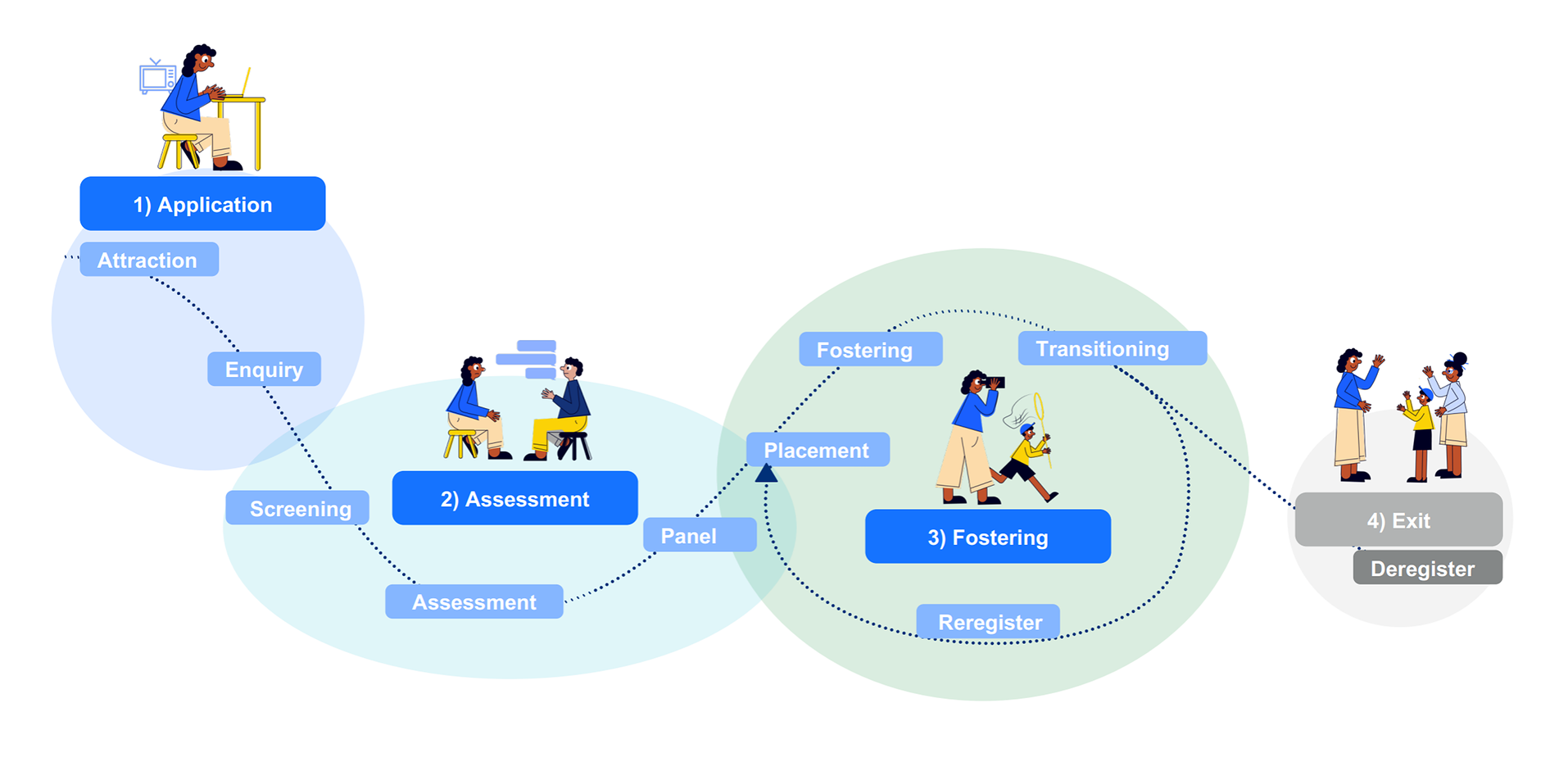
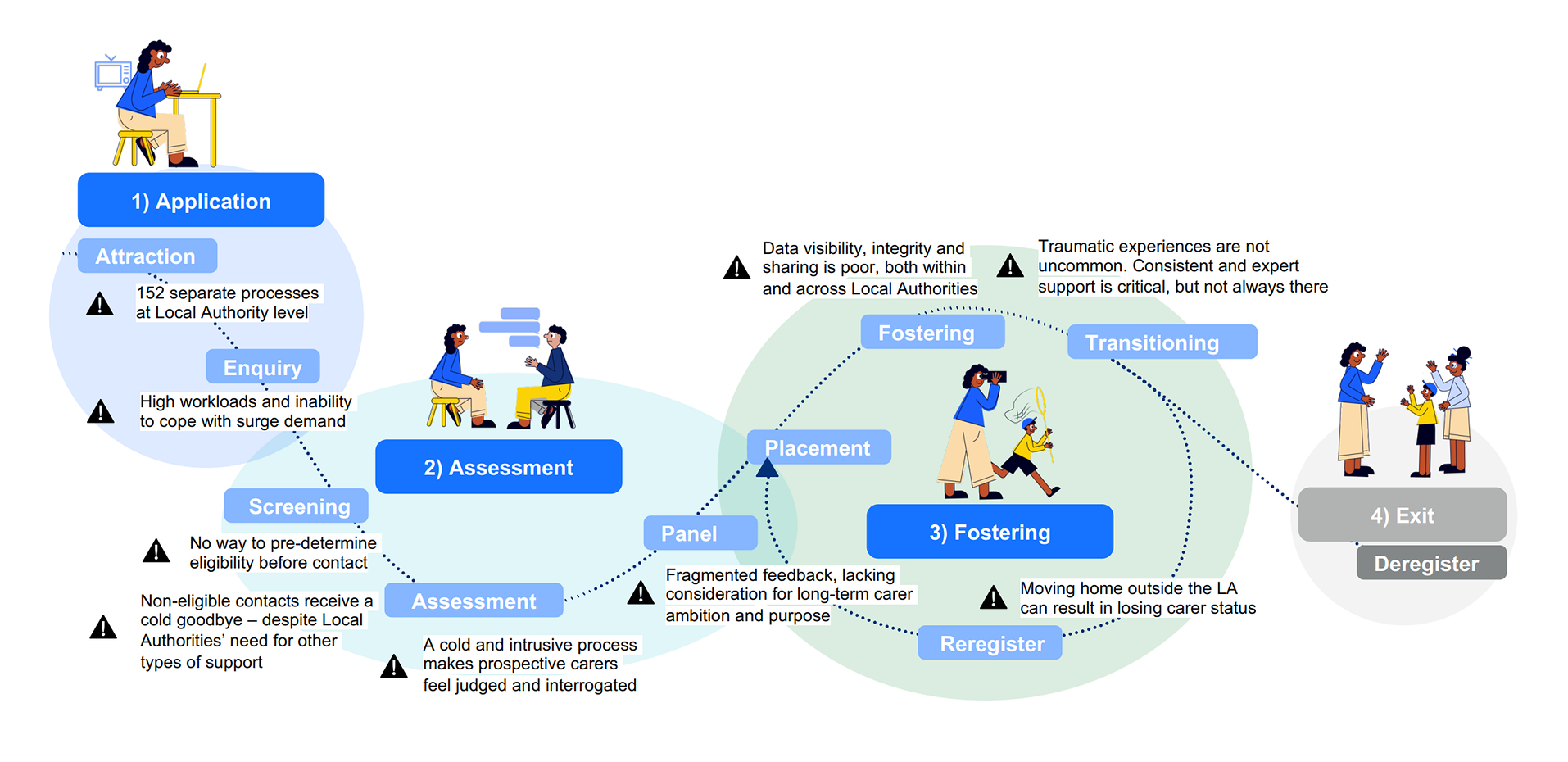
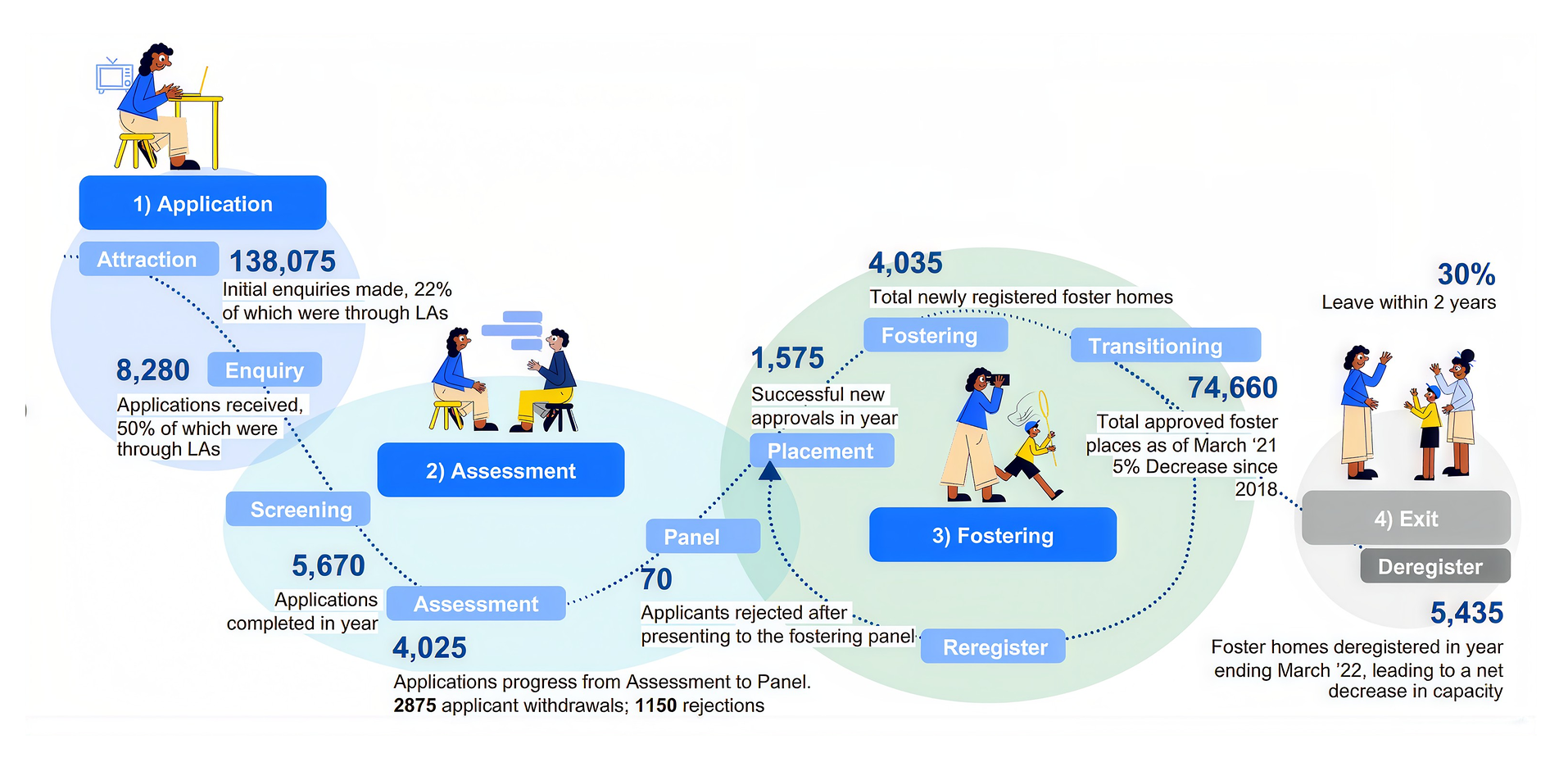
I started by mapping the basic ‘As is’ process to understand how the service worked, then added layers showing user data, pain points, issues and opportunities. This built a richer picture of the experience, helping myself and the team understand where problems occurred, how they connected and where improvements could be made.
We had an in-person, whiteboard workshop that focused on mapping the end-to-end foster carer journey at a high level, from initial enquiry through to application, assessment, training and preparation for a first home visit. We explored key touch-points, content and functionality to create a more joined-up, supportive experience for prospective foster carers.
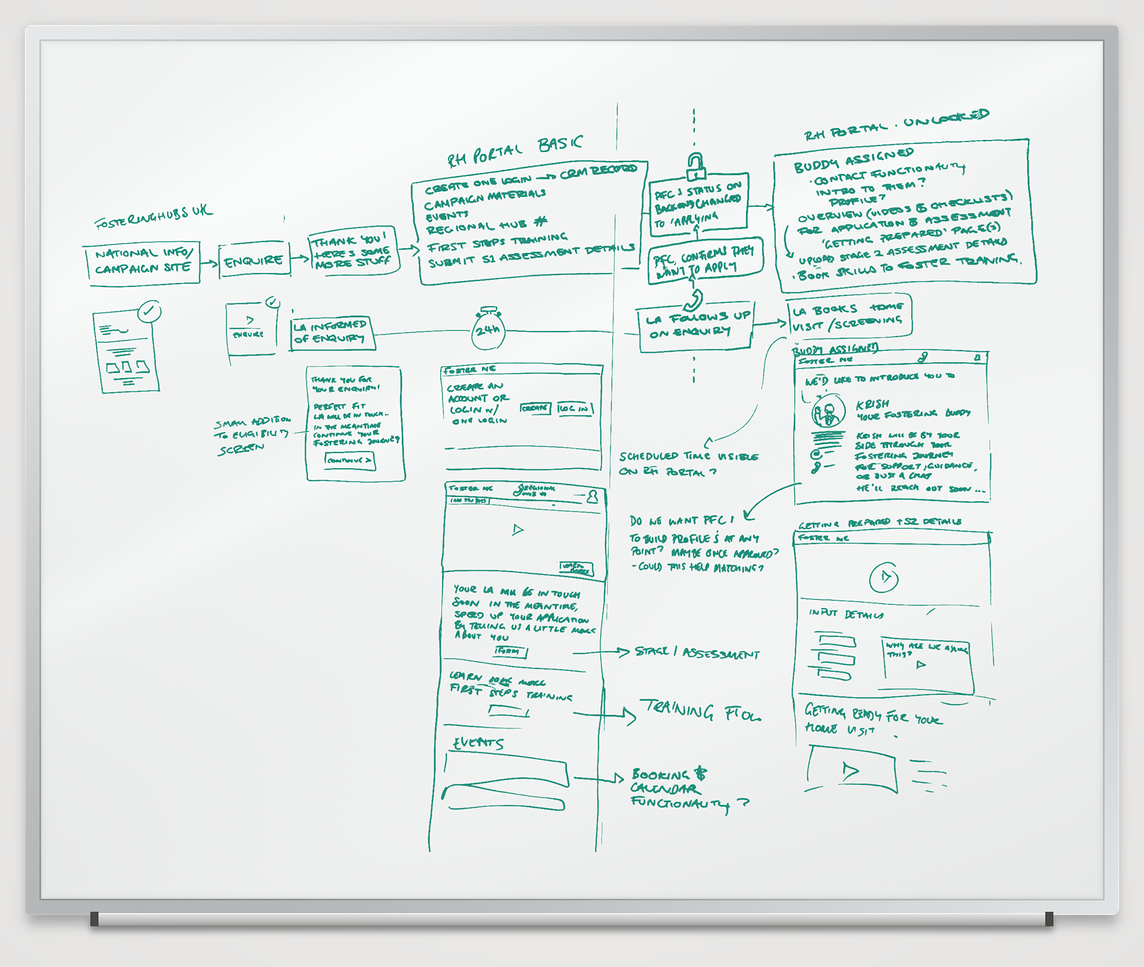
Building on my own understanding of the research and the workshop output, I drew this high-level mini wireframe flow map in Figma to show a proposed new fostering application journey, from first enquiry to approval, across national, regional and local teams.
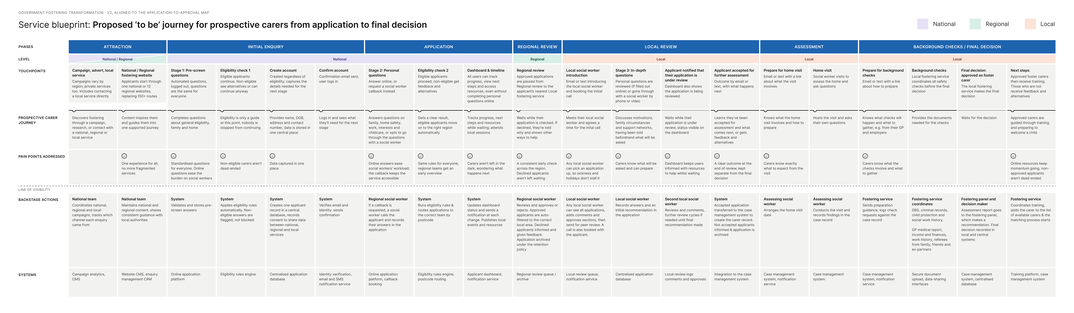
Using the wire-flow map as a foundation and feedback from team, I drew a more traditional Service Blueprint, mapping the journey from application to final decision.
Myself and the team felt a traditional Government aesthetic wasn’t right for the audience based on research with prospective foster carers, so we explored warmer, more engaging visual approaches using GDS principles. With no brand guidelines for how to do this and limited time, decisions were made quickly. As the project is ongoing, I’m unsure what visual direction was eventually adopted.
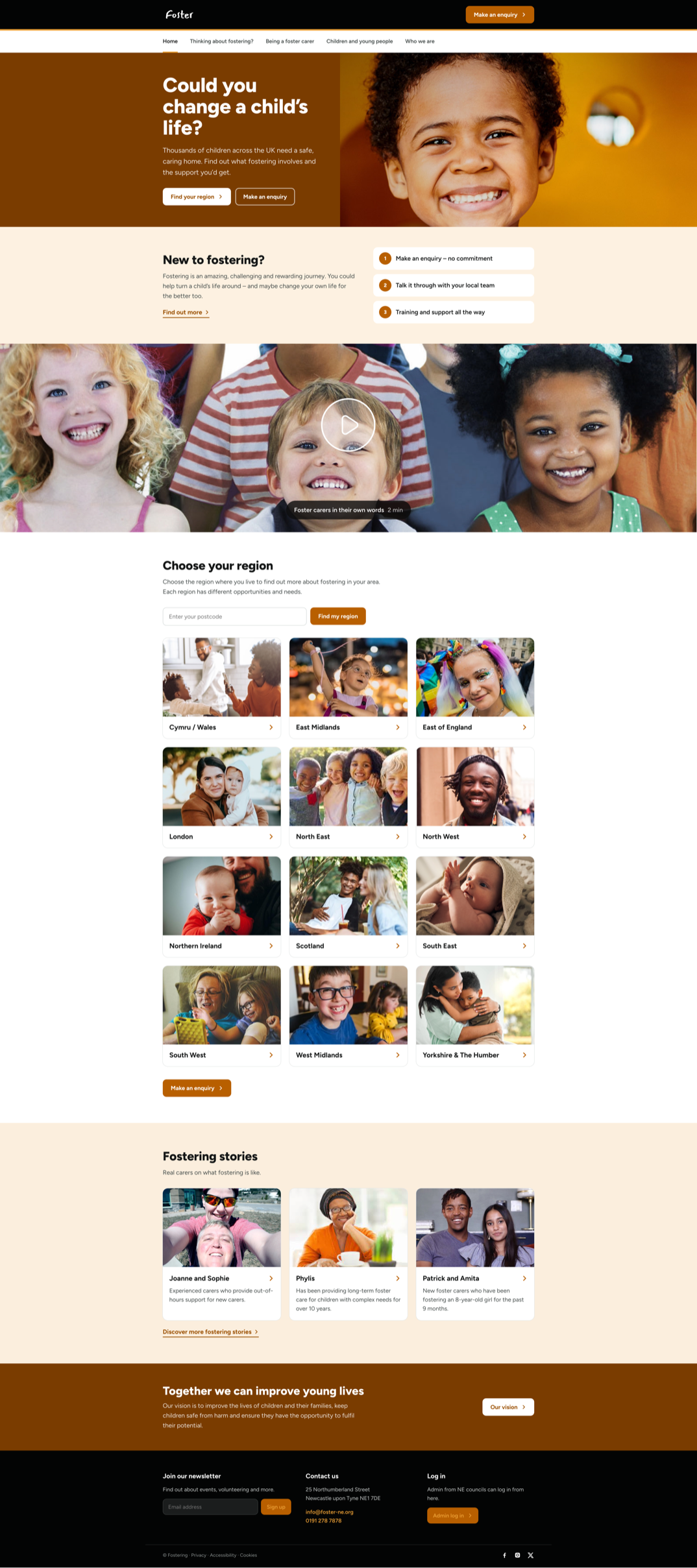
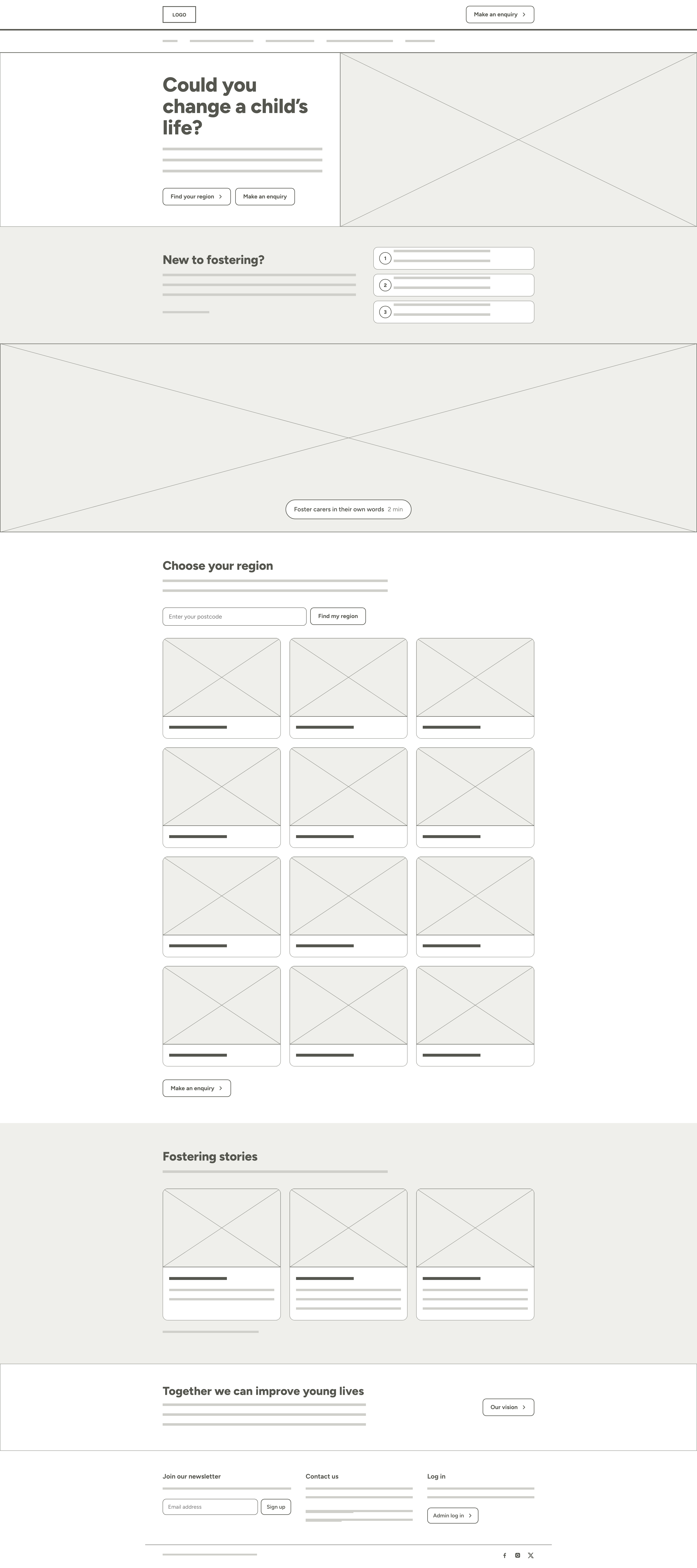
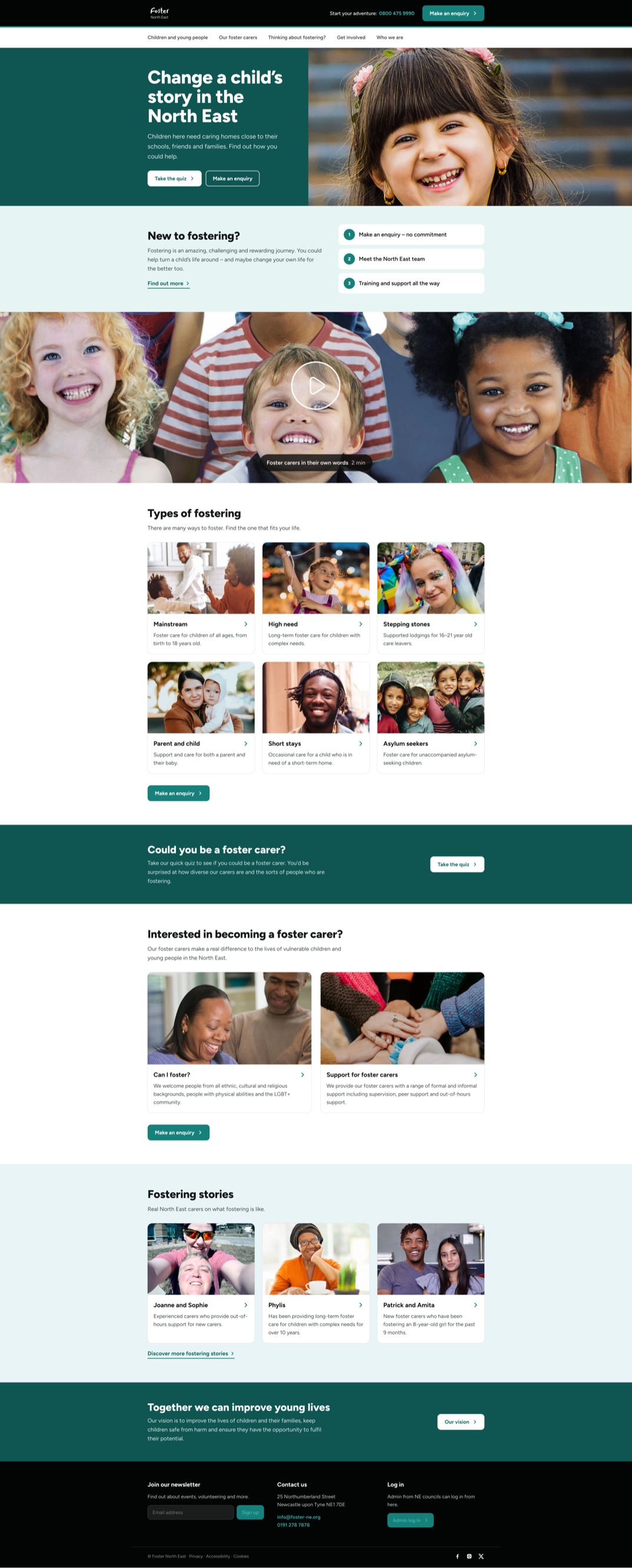
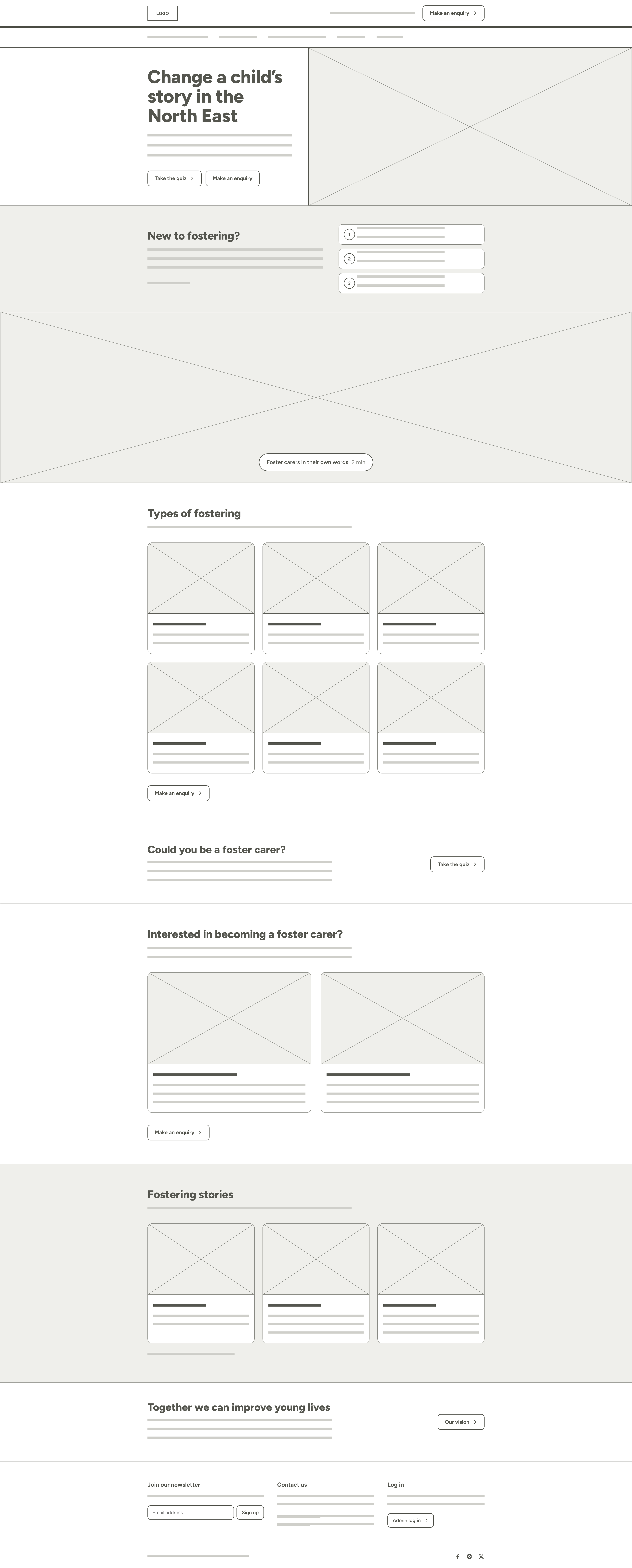
Wireframes covering the enquiry journey from initial questions to confirmation. I reviewed 150+ existing application processes to identify the key questions to retain. The team reviewed the work, enabling front-end development to begin.
01Question 1: Full name
02Question 2: Date of birth
03Question 3: Spare bedrooms
04Question 4: Postcode
05Question 5: Working
06Question 6: Contact details
07Question 7: Best day to call
08Question 8: Best time to call
09Check your answers
10Confirmation: probably suitable
11Confirmation: probably not suitable
The prototype used for Government Gate 2 assessment to show the initial enquiry experience was built by a front-end developer using the GDS Prototyping Kit. This is my Figma version.
The prototype used for Government Gate 2 assessment to show the logged in experience was built by a front-end developer using the GDS Prototyping Kit. This is my Figma version.
I really enjoyed this project. Although it was a short contract, I felt I made a valuable contribution and was part of a genuinely professional, supportive and friendly team.
“Ronnie's experience, professionalism and imagination shone from day one of us working together and I have no problem at all in recommending Ronnie and truly hope we work together in the future.”
I was fortunate enough to work with Ronnie as part of a high-performing team within the Boston Consulting Group. The fluid nature of the project and the rapid decisions needed for the project to succeed were too much for the initial designers that were placed in the project.
What was needed was Ronnie, a seasoned professional that could handle quick-fire decisions and come up with high-quality concepts with very little direction that could be used to demonstrate to the client how a new service could look and then rapidly iterate those concepts for wider use as feedback was gathered.
Ronnie's experience, professionalism and imagination shone from day one of us working together and I have no problem at all in recommending Ronnie and truly hope we work together in the future.

“Ronnie is an expert in taking ideas and making them real and tangible, and her input was key in bringing stakeholders on board with our vision.”
I worked with Ronnie as part of a BCG team that accelerated the digital transformation of a crucial but somewhat neglected government service. Ronnie is an expert in taking ideas and making them real and tangible, and her input was key in bringing stakeholders on board with our vision. The client couldn't have been happier with our work and, commenting specifically on Ronnie's deliverables, said "This is ace, I really like it. It's refreshing to see something like this. It's going to do amazing things for [our department and work]".
Ronnie was a joy to work with. She is versatile, consistently delivers high quality work quickly, integrates and collaborates seamlessly with new teams to bring her expertise and ideas from day 1, and has strong design integrity and principles.

“She performed great - incredibly fast paced and strong work ethic, a good team player, produced high quality designs and Figma outputs in a short space of time, and very flexible to adapt to changing needs on the project.”
Ronnie worked in my team on a rapid digital product development project, in a UX Design and wireframing role. She performed great - incredibly fast paced and strong work ethic, a good team player, produced high quality designs and Figma outputs in a short space of time, and very flexible to adapt to changing needs on the project. Would happily work with her again.
Please get in touch about permanent or freelance opportunities. You can find out more about what I’m looking for on my About page.
